Up, off and away - test your knowledge of the solar system!
Where would you weigh the least?
If you travelled around the solar system your mass wouldn’t change, but as you experienced different levels of gravity, your weight would. The surface gravity of Pluto is just 6% that of the Earth, meaning that you can jump 15 times higher on Pluto than on Earth!
Which planet has been called the “Solar System's vacuum cleaner”?
Jupiter is the largest planet in our solar system and therefore has a very strong gravitational pull. This means it gets quite a bashing – it has to endure around 200 times more comet and asteroid impacts than Earth! Some scientists think this means Jupiter protects us from damage, but others say Jupiter’s gravity ejects comets just as often as it pulls them in.
Which planet has the slowest rotation on its axis?
It takes 243 Earth days for Venus to spin on its axis and 224.7 Earth days to orbit the sun. This means a ‘day’ on Venus is longer than a ‘year’!
Which planet has the largest moon?
This moon, called Ganymede, is larger than Mercury and Pluto! If it wasn’t a satellite orbiting Jupiter, it could be considered a dwarf planet.
Which of these is the smallest?
Pluto’s diameter is about 2,370km, about half as wide as the greatest distance across the mainland USA (4,654 km). This makes it much smaller than other major planets, hence why it is now known as a “dwarf planet.”
Which is the windiest planet?
The winds on Neptune blow at more than 2,000 kilometres (1,200 miles) per hour. This is about 6 times faster than the fastest hurricane wind speed recorded on Earth!
Which planet is the hottest?
Although Mercury is closest to the sun, it has no atmosphere and spins quite slowly, so its surface temperature varies. Venus, on the other hand, is close to the sun and has a thick atmosphere, which is made up of heavy clouds of carbon dioxide and sulphur dioxide. Its temperatures regularly reach 460 °C, more than four times the temperature of boiling water!
Which planet has the biggest volcano (that we know of)?
Olympus Mons is nearly 22km high, two and a half times as tall as Mount Everest's height above sea level. It’s a shield volcano, which means it’s made almost entirely out of fluid lava flows. On Earth, these types of volcano are often found on the Hawaiian and Galápagos Islands.
Where to start?
First, we need to decide what ‘living on another planet’ means. A one-off visit by an expedition of astronauts is very different to an outpost regularly supplied from Earth, or a long-term colony, spanning generations, living independently from humans on Earth.
In short, a visit to another planet by a human crew is possible, but some are easier to explore than others. Each planet is different and has a unique set of challenges. For example, the largest planet in our Solar System, Jupiter, is a ‘gas giant’ mainly composed of hydrogen and helium gas. Without a well-defined solid surface, it would be nigh on impossible to set up camp there.
How about Venus? Well, Venus does have a solid surface: a good start. But its thick and dense atmosphere of (mostly) carbon dioxide (C02) makes the pressure at the surface ninety times higher than it is at the Earth’s surface! That’s the same as 900 metres below the ocean’s surface on Earth, and deeper than even modern nuclear submarines can access (although specialist deep-sea craft can now reach greater depths).
To make things even harder, the high concentration of carbon dioxide in Venus’ atmosphere causes a very strong greenhouse gas effect. This means that the temperature on its surface is around 460°C! A number of unmanned missions have failed prematurely in the past due to this. For example, the Soviet unmanned lander programs Venera and Vega stopped functioning within one to two hours of landing, due to the high temperatures.
A life on Mars
So Jupiter is a no, and we can pretty much say the same for Venus – but what about Mars? It’s the planet closest to the Earth after all. Mars has slightly lower gravity than Earth, and its atmosphere is extremely thin and consists of mostly CO2, which is poisonous to humans. Although Mars has an average temperature of -63°C, which would be very cold for humans, its highest temperature is a toasty 30 °C… This is starting to sound promising… That said, it's likely to feel pretty cold most of the time since the thin atmosphere wouldn’t offer much insulation. But in theory, a visit by a manned crew could be comparable to a visit to the Moon and we’ve done that almost 50 years ago!
The key difference is that it takes a lot longer to travel to Mars. Instead of a roughly four-day flight to the Moon in the days of Apollo 11, any flight to Mars with current technology would take several months. NASA’s Curiosity Rover that landed on Mars in 2012 took over eight months to make the journey.
But while this might be expensive, it’s not impossible to sustain a crew of astronauts for the flight there and back. We know from previous successful missions to the Mir and International Space Station (ISS) that humans can survive over a year in zero-gravity at a time.
Even setting up a manned outpost - similar to the International Space Station - on Mars, is a possibility. It would just be really costly, especially due to longer supply lines to Mars than to the ISS. The distance to the Moon is already about 1000 times further from the Earth than the ISS is, and Mars is over a hundred-thousand times further than the ISS.
Not to forget…
There are some other key challenges to visiting or setting up camp on Mars that we should probably think about. For example, there are only trace amounts of oxygen and water vapour in the atmosphere. The low pressure on the surface of Mars (only 0.6% of the pressure at the Earth’s surface) makes it impossible for liquid water to exist on the surface of Mars without evaporating.
Low pressure, low temperature and lack of a breathable atmosphere aren’t necessarily as bad from the point of view of human exploration as the very high pressure and temperature on Venus. In fact, these factors are less likely to make equipment fail. But any humans settling on Mars would definitely need to live underground or in enclosed environments with artificial atmospheres and water supplies, and they would have to wear space suits to venture outside.
The poles of Mars feature lots of frozen water, and large supplies of frozen water have been found just under the surface. This means that with energy from solar cells, ice could be melted in a pressurised environment and oxygen could be produced from it using electrolysis.
Food production would be difficult (fertilizers for growing plants would be difficult to produce, even with enough water and sunlight for plant growth), and establishing modern industries to make any colony self-sufficient would be very tricky.
To sum, a colony on Mars is not impossible, it’s just not at all clear exactly how it would work.
Where else?
Planets outside our Solar System - known as exoplanets - are too far away to access using current technology within the lifespan of a human. And too far away to access using any technology we can imagine at this time.
One of the fastest spacecraft ever launched from Earth, the New Horizons probe, took 9.5 years to fly from the Earth to the dwarf planet, Pluto at the outermost reaches of the Solar System: 4.7 billion kilometres away. Impressive as that sounds, the next-nearest star (other than the Sun) is almost ten-thousand times further away! Reaching those planets with a human crew would take thousands of generations, living and dying on the spacecraft. All the supplies for the journey would have to be carried on the spacecraft, without a possibility of resupplying.
However, let’s imagine for a moment that we could get there… Several exoplanets in the ‘habitable zone’ (the right distance from their star to support liquid water and potentially life forms) have been identified. We just don’t know much about the conditions on them compared to the planets in our Solar System so it's difficult to assess their suitability. To learn more about exoplanets, have a listen to Dr Ruth Angus (Columbia University).
How would we get there?
-
You might be familiar with aluminium (AI) from its everyday use in cooking foil, food cans and saucepans. As a metal, it’s light, strong and one of the most abundant metallic elements in the Earth’s crust. But did you know that when combined with lithium (Li) in an alloy, aluminium becomes a particularly useful material for building a spacecraft? This is largely because it’s so light – aluminium is 13th in the periodic table and lithium is 3rd! This not only helps to overcome the challenge of propelling a big object like a rocket into space but it also helps protect against higher levels of radiation found in space. On Earth, we’re protected from radioactive solar winds (from the sun) and cosmic rays by our planet’s own magnet field known as the magnetosphere. Out in space, we can’t rely on this protection and so any material on the outside of a spaceship would be battered by radiation. It’s important to be resistant to this impact and not react badly as some high energy cosmic rays and ionised particles in solar winds can make materials radioactive. Aluminium and lithium are safer than most for this because unlike heavy elements their low elemental mass means they are less likely to become radioactive. Two key benefits of using aluminium lithium alloys are they are stronger than each of the single elements, and they are ductile. This means that they bend rather than crack and break (fracture) making them easy to machine and turn into all the components with complex geometries needed for building a spaceship.
-
As the name suggests silicon carbide (SiC) is made from combining silicon and carbon. It’s used to make car parts (such as brakes and clutches), bulletproof vests, cutting tools, sandpaper and even jewellery. Like aluminium lithium alloys, silicon carbide has the advantage of being lightweight. But more than this, it’s able to cope with the extreme highs and lows in temperature associated with: leaving and re-entering our atmosphere, the intense heat from the rocket boosters that propel the spaceship into space, and the different environments on other planets. And so silicon carbide can be used effectively as a protective shield on spaceship engine parts that are most exposed to extreme temperatures. It’s also a very strong material which may help to protect a spaceship from the potential damage which could be caused by oncoming micrometeoroids, and other unavoidable objects encountered in space travel. That said, it’s still considered to be a brittle material which means that, despite its ability to withstand high impact, when it gets damaged, it breaks in a non-recoverable way. This and its high melting temperature make it difficult to make into complex components. This is why it’s generally used as plated armour or shielding in combination with ductile materials such as aluminium lithium alloys.
-
Carbon (C) is used for a range of different purposes from being the core component in most fuels (coal, oil, natural gas) to graphite which is used in pencils, brushes in electric motors and nuclear reactors. However, its structure can also be controlled on an atomic level to form what’s known as carbon nanotubes (see image below). These tiny cylindrical carbon molecules have a diameter measuring on the nanometre scale. To put this in context, one nanometre is 10,000 times smaller than a human hair! But don’t underestimate the powers of this material! It may be tiny but it’s also extremely strong: at least 100 times stronger than steel but only one-sixth as heavy. For this reason, carbon nanotubes (or fibres) are often added to other materials to increase their strength. As a material, it also has considerable elasticity which means that it can resume its normal shape after being deformed to a relatively large extent e.g. stretched or compressed. Overall, carbon nanotube technology has the potential to significantly reduce the weight of new spacecraft which in turn reduces the amount of rocket fuel needed and the subsequent carbon dioxide emissions.
-
NASA is currently conducting research into using self-healing materials that can protect and repair a spaceship from the destructive impact of micrometeoroids and other forces. One of the clever materials that they’ve been developing is one which is composed of three layers - two thin polymer walls which sandwich a reactive liquid middle layer. When either wall is punctured in some way, the liquid in the middle layer will automatically fill the gap and harden when exposed to Oxygen. In its current design, it couldn’t be used for a spaceship’s exterior walls but it has potentially valuable applications for interior walls (as a protective liner), radiation shielding, and for encasing fuel tanks. It’s hoped that this technology will provide a life-saving stop-gap, allowing time for astronauts to repair a puncture properly. Researchers are also experimenting with materials that are able to self-detect damage. This is achieved by passing a small electrical current through the material. Any change in the current’s path or resistance is flagged up to astronauts as a possible risk of damage or impact that needs checking.
-
When testing the characteristics of a material we can do so in a number of ways either on a large scale (macro testing) or on a tiny scale (micro testing). Commonly used techniques are tension and compression tests which see how materials perform when either pulled or squashed respectively. Big tests (macro) are good if you have lots of the material of interest. However, if the material is expensive or only made in small batches then you need micro testing something that Oxford University specialises in. When investigating materials on a very small scale, the researchers in the Oxford Materials department create tiny beams called cantilevers, typically only 10 microns long (a tenth the width of a human hair). These are then placed in a machine known as a nanoindenter and a tiny needle pushes down on the beam. This can test a material’s mechanical properties (e.g. strength and elasticity) and behaviour. These techniques are sometimes referred to as destructive tests as researchers will often push a material to its limits to see what it takes for it to fail. An example of a non-destructive test is one which uses ultrasound technology - the kind used in hospitals to scan pregnant women. Ultrasound can be used in materials like echo location to find if there are flaws and cracks which reflect back the sound. Non-destructive test methods like these are particularly good for checking components before you use them since the candidate material is not damaged in the process.
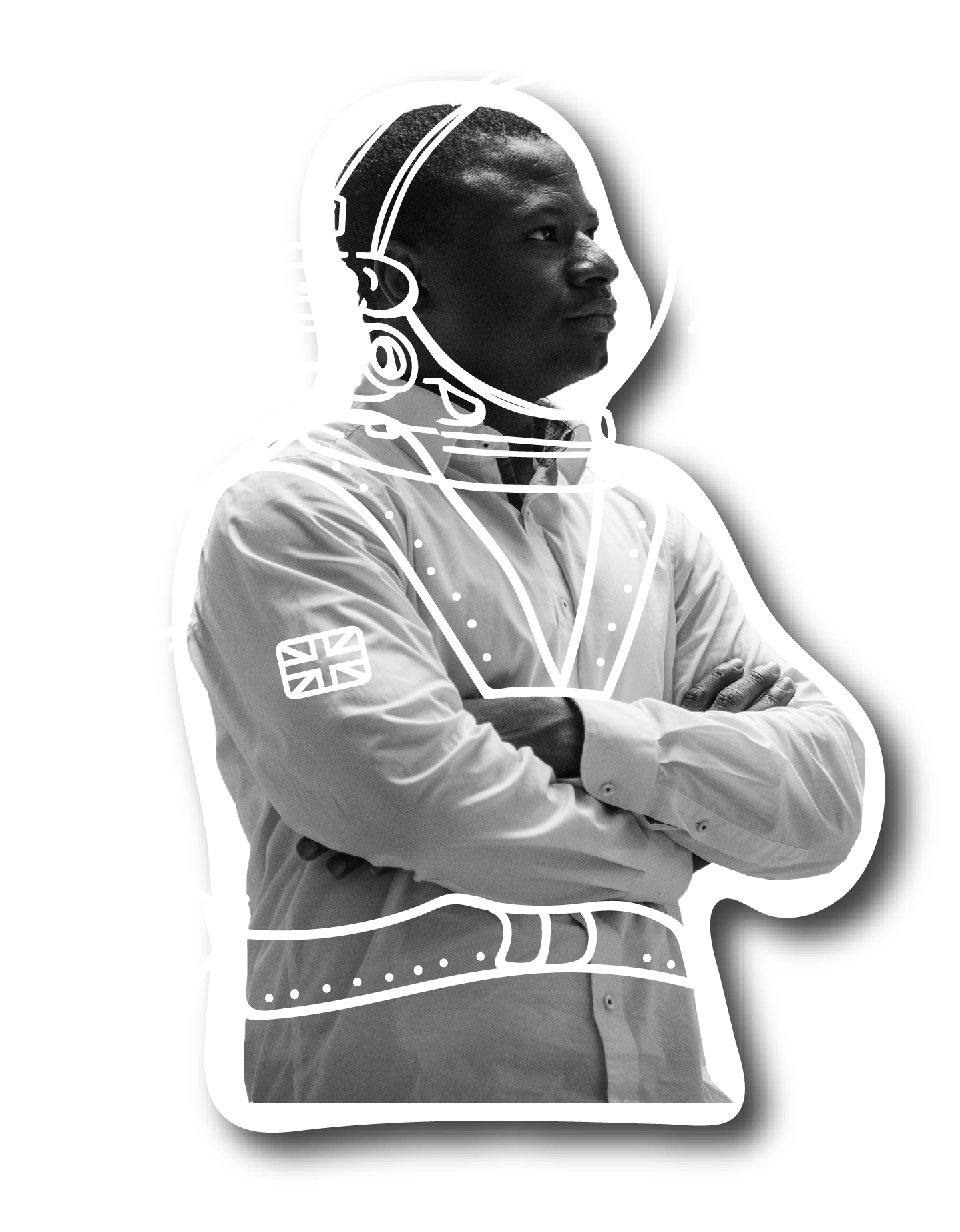
Are we using more resources than the Earth can provide? If so, what’s the solution? Should we try to move to another planet? Dr. Stuart Armstrong (University of Oxford) is part of an expert team that works out global risks to humans living on Earth (see the Global Catastrophic Risks 2017 report). He says although this is a difficult question to answer, there are ways for us to continue living on this planet if we adapt.
Drinking seawater
You might be surprised to find out that it’s not the essentials - such as water running out - that threatens human life on earth. In fact, Dr. Armstrong explains that: “We could have enough food, water and energy for the whole human race for the foreseeable future and at reasonable costs. Take water… most of the world’s water is seawater. The worst thing we’d have to do is get all our water from the sea! But there’s plenty of it. We’d have to remove the salt to make it drinkable [in a process known as desalination] but this is feasible”.
“Now let’s look at food. The ultimate way of producing food would be by growing plants in greenhouses without soil - this is called hydroponic growing. We’d use much less water growing food this way which would lead to a huge decrease in water use,” he says.
The power of the sun
When thinking about how long we can survive on Earth, another big issue is energy - heat, light and fuel to transport people and goods around. What will happen when our supply of fossil fuels (oil, gas and coal) runs out or becomes too difficult for us to get out of the ground? “We could replace our current energy sources [with renewable ones such as hydro (water) or solar (sun) power]… using solar panels at current prices would mean spending only a tiny bit more than we currently do,” suggests Dr. Armstrong. There would have to be solar panels everywhere and they would need to be well looked after to ensure they always worked. But this is doable.
“The world has a lot of problems but lack of basic resources isn’t one of them,” says Dr. Armstrong.
Meteorites and medication
So if lack of food, water and energy isn’t the biggest risk to human life on Earth, what is? What about an strike from meteorites…like the one which is said to have made the Earth unlivable for the dinosaurs? The National Aeronautics and Space Administration (NASA) space station in America funds several survey teams to look out for meteorites. “Should an impact be predicted with sufficient warning time, several techniques are being studied that may allow successful deflection [i.e. we may be able to direct meteorites away from us],” says Dr. Armstrong. And so the risk of this happening and seriously damaging the Earth may be decreasing as we learn more about the Universe and how we can interact with it.
When thinking about disease, you may have heard in the news about the concern that antibiotics (such as penicillin) - which help fight infections - may eventually stop working. The NHS and global health organisations are trying to reduce the use of antibiotics, especially for conditions that aren't serious. This is because their overuse in recent years means that they're becoming less effective and it’s led to the emergence of so-called "superbugs". These are strains of bacteria that have developed resistance to many different types of antibiotic.
It’s only been 76 years since a team at Oxford University proved penicillin could kill infections, can you imagine if we were to return to the days before this life-saving cure?
“We can survive again without antibiotics”, says Dr. Armstrong. “There were ways of dealing with diseases caused by bacteria such as isolation which is how they were treated before penicillin.” [There used to be places called isolation hospitals where people went if they had a highly infectious disease]. This obviously isn’t ideal and seems like a bit of a backwards step - Dr Armstrong explains - but the point is, we could do it. If antibiotics stop working, it won’t kill off the human race.
Biggest risk to life on Earth
What then is the biggest risk to life on Earth? Well, latest calculations show that it’s us, humans! “Human-generated risks are the most dangerous, such as nuclear war, some biotechnology risks (e.g. the development of human-created microorganisms that could lead to rapid outbreaks of disease), and maybe artificial intelligence,” says Dr. Armstrong.
If we take nuclear war, for example, this is a threat that’s existed since the end of the Second World War in 1945 and it hasn’t happened yet. A lot depends on humans (especially those in power) managing to get along with each other without falling out to the point that we mutually blow ourselves up. You could argue that if we were to move to another planet, we’d take all our human problems with us. It’s a bit like going on holiday or moving to another area... There might be a change of scenery and geography, but ultimately we’re still the same people – so we’d still have rows.
Life on Earth could also be threatened by the growth of clever computer programs, known as Artificial Intelligence (AI)”. “If the world is changed to suit AI, it may not be compatible with human life. There is great uncertainty about AI. Could it run the world to suit itself and not humans? Or it might only be compatible with some humans, not all?” says Dr. Armstrong.
And so “We may well be able to move to another planet, but we’d need to take a lot of the Earth’s environment with us or remake it when we get there. The technology to allow us to do this is developing all the time. But why should we do this when it’s so much easier to use the same technology to continue to live on Earth? We don’t need to find another planet; we need to find a way of staying on this one and making sure we don’t blow it up!”
Reasons to be cheerful
“There are many reasons to be optimistic about the future. Right now, there are no real risks to the survival of humans on Earth. You could even say human life is flourishing as quality of life is better than ever, though some might disagree and of course, this is a big challenge in some parts of the world,” says Dr. Armstrong.
Teamwork on a global scale
What’s most needed for human life to continue indefinitely on Earth is for people and countries to work together. This is necessary not just to prevent wars - nuclear and otherwise - but to join together on new ways of managing our environment. We can be a lot further on the way to solving life on Earth if we really want to be. It needs long-term planning and international cooperation. It means making changes to our lives now for the sake of future generations. Already some of these changes are happening, such as: charging for carrier bags to discourage the use of plastic; recycling as much as we can; travelling less; eating locally-grown food and putting on a warm jumper instead of turning up the heating! If everyone made small changes, it could make a big difference.
There is much hope concludes Dr. Armstrong. “Renewable energy sources are reducing in price all the time and energy storage is getting better too. We’re making the problem easier to solve.”
So we may not need to move to another planet to survive after all. Are you relieved or maybe you were looking forward to living on another planet – and taking an intergalactic tour?
Life on Mars: space exploration in literature and film
-
This Japanese TV anime show set in the future is about a bounty hunter called Spike Spiegal. He’s a laid back guy but don’t let that fool you- he’s also got some spectacular martial arts skills! He roams the galaxy with his pals Jet Black and Faye Valentine, searching for fugitives to catch. There are many big ideas being explored in this TV show, like philosophy, loneliness, life and existence. The original series ran from April – June 1998 in Japan, and it went on to gain worldwide popularity!
-
Created by Andrei Tarkovsky in the former Soviet Union, this film is based on the book that Stanislaw Lem published in 1961, with the same name. The story is a psychological drama about people on a space station which orbits the planet known as Solaris. The book is centred on the difficulty humans might face when trying to talk to creatures from other planets, but the film focuses much more on the feelings of the scientists who are navigating Solaris.
-
This film, released in early 2017, is about three African-American women with a very special talent. It’s based on a book (called Hidden Figures: The Story of the African-American Women Who Helped Win the Space Race) by Margot Lee Shetterly. During the race between the USA and Russia to send a man into space, these remarkable women were NASA employees, and became the brains behind the mission! The film portrays a time when racial segregation was still enforced. These incredibly intelligent women are celebrated for their heroism, shaping history, and starting a crucial shift in people’s attitudes towards African-American women.
-
Ridley Scott’s 2015 film is based on a novel by Andy Weir, also called The Martian. It’s about an astronaut who goes to Mars and is incorrectly presumed dead so left on the hostile planet alone. We then learn about the lone astronaut using his intelligence, courage and determination to survive against all odds. The filmmakers worked with NASA to accurately depict the types of technologies that would be used on a mission to Mars; in making the film as realistic as possible it was hoped that more people would become interested in space exploration. Fun fact: some of the scenes of ‘Mars’ were actually filmed in Jordan in the Middle East!
-
2001: A Space Odyssey is an epic journey into human evolution! It looks at the relationship between humans and machines, and the complexities of survival. With an incredibly powerful soundtrack and spectacular cinematography, this film is a classic that many people consider a masterpiece. Directed by Stanley Kubrick, the film follows a group of scientists on board a space mission to Jupiter, along with a very intelligent computer called HAL, who controls the spacecraft. HAL is supposed to be perfect, and unable to make mistakes, but all is not quite as it seems…. Although it was made in 1968, 2001 has influenced lots of technology that we use today. For example, the film contains computers that look like tablets, TV screens on the backs of seats, intelligent computers, and voice recognition software.