Can we ever know that something is true?
For example, many years ago people genuinely ‘knew’ that the earth was flat. This wasn’t an opinion. It was the truth for the times people were living in back then. They had no reason to believe the earth wasn’t flat - until it was later proven by scientists to be a globe.
Today the term “flat earthers” is used to describe people who refuse to believe something is true despite all the evidence that demonstrates it is.
Dr. James Studd, a lecturer in the Philosophy of Mathematics (University of Oxford) says, “The earth was always round. That was always true. What’s changed is the belief and the knowledge about the Earth. The Earth didn’t change - we did!”
The moon is made of cheese!
There is absolute truth - such as the Earth is round - but philosophers prefer to just talk about truth adds Dr. Studd. “I might say that the moon is made of cheese. That’s false. I might also say that broccoli is good for you, which is true.”
When it comes to belief and knowledge- “It’s easier to think of knowledge as evidence; we get knowledge from evidence,” he says.
For example, some scientists say that eating fat in our diets isn’t as bad for us as once thought. However, some still say it is. What we actually believe about this will depend on three key things:
1. Do we trust the science?
2. Do we pick which bits of the science we agree with?
3. Do we just ‘feel’ it to be true?
So we can have an opinion on whether eating fat is good or bad for us but it’s usually going to be based on something. Perhaps we read an article about it or saw a TV programme, and that rang true for us. Or someone we trust told us fat was good or bad for us.
We reached a belief based on something. There is no absolute truth about eating fat or not - whereas the earth is round and broccoli is good for us.
Beliefs need believers!
For a belief to exist, you need believers. This is the relationship between a proposal about something and people believing it.
For example, let's take the example of whether fat is an unhealthy part of someone's diet, again...
Most people aren’t in a position to tell if something is good or bad for us. So they either believe what feels right to them, what makes sense in their view, or they look at the evidence and weigh it up.
Back to broccoli... yes, we ‘know’ it’s good for us because of the weight of evidence demonstrating this. But what about apples? We were once told to eat an apple a day.
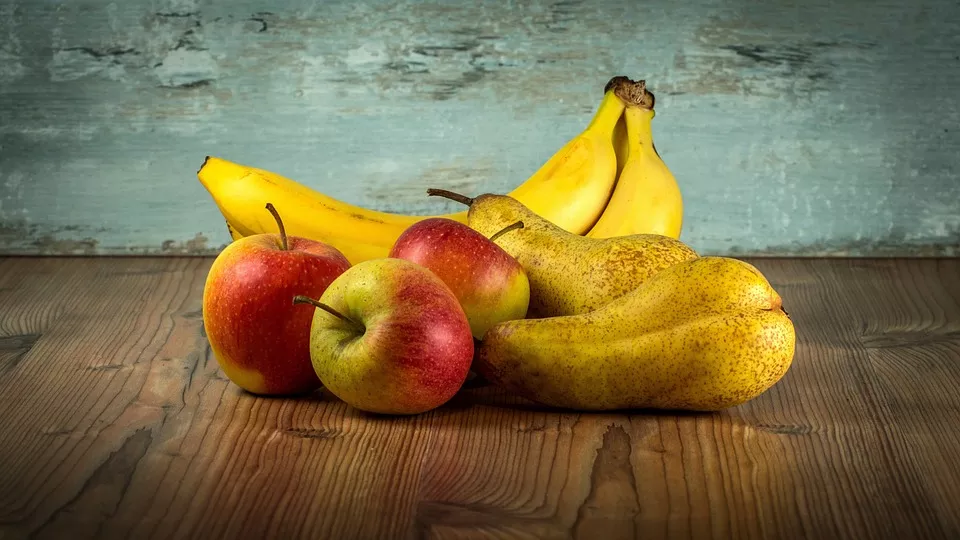
Then we were told to eat five pieces of fruit or vegetable a day.
Now some doctors tell us apples and other fruits are full of sugar and may not be so good for us after all.
Sugar rots our teeth - that is truth not opinion since science has proved this to be the case - and so has toothache if you’ve ever suffered from the results of tooth decay caused by sugar consumption.
But the poor old apple hasn’t changed at all! Just what some scientists now tell us is the new truth about them.
Believe it or not, doctors once thought smoking wasn’t particularly harmful. Now thanks to science and evidence, we know the truth about smoking. But the truth hasn’t changed. Smoking has always caused cancer, in some smokers just like how the Earth has always been round.
“No one decides what is truth. But we may come to know something about the world from gaining knowledge based on evidence,” explains Dr. Studd.
Have you ever thought something was true then later discovered it wasn’t? What made you change your mind?
Why philosophy and maths are closely linked
Philosophy may seem like a subject that doesn’t belong among science subjects but in fact, there have always been strong links between Mathematics and Philosophy.
Logic (a science that studies the principles of correct reasoning), for example, is an important branch of both subjects and it provides a bridge between the two.
Philosophy is one of the very few disciplines that can be studied as an arts subject or a science.
“Maths and Philosophy are similar in that they are both what we might call ‘armchair disciplines.’ When you’re doing Maths and Philosophy you don’t need to go out and gather data. You don’t need a lab. Just a pencil - and time,” says Dr. Studd.
And sometimes in Philosophy the character of the argument is quite mathematical. So you have a hypothesis about something and you make some calculations about it. This isn’t that different from Maths when you set out with theories which you try to prove are true or false. “But not all philosophical questions are approached in this Maths-style way,” he adds.
Philosophy and truth
People study Philosophy alongside Maths and also social sciences, such as politics, and arts subjects such as French, Greek, and the classics.
Philosophy is a large discipline with various strands to it. It can be analytical, as Maths is, or it can be closer to literature. “It isn’t quite a science but it’s continuous with science,” explains Dr. Studd.
Philosophy helps us deal with questions about what is and isn’t true by encouraging us to stand back and look at the broader picture.
It may not give us absolute truths but it helps us shine a light on how we think about what is and isn’t true. Why we might hold some beliefs and what the difference is between belief and evidence.
What do you think? How do you determine what is true and what to believe?
6 ways to tell if a statistic is true
-
Who are the authors of the study and who paid for it to take place? Who is likely to benefit from the results of the study? For example, imagine reading the statistic that “80 % of dentists recommend Brand A toothpaste” as it “kills 99 % of germs”. If the dentists here had been paid in some way by the toothpaste company, which paid for the study, can we view the results as reliable? Not really, as somebody looks to gain financially from the results. And so we can naturally expect there to be some kind of bias towards the company.
-
If you’re looking at a scientific study in a journal, it can be helpful to check the “impact factor” of that journal. The impact factor measures the rank of a journal based on the number of times its articles have been mentioned (or cited) by other researchers in their work. Generally, journals with high impact factors are considered to be more trustworthy as they have gone through more careful review processes. That said, beware of journal bias. This is where journals have a bias toward publishing positive results i.e. where a real difference is found among samples. But no one tends to publish the many experiments that have been tried and didn’t show conclusive differences. It would be useful for researchers to know which experiments had been tested and failed so to avoid doing unnecessary work repeating them.
-
The idea of statistics is to test, mathematically, the probability that the difference you see between samples is real. It also gives a specific level of confidence that differences seen in the sample should be seen in the greater population too, allowing us to draw conclusions about the greater population from our sample results. This is when the idea of sample size and representation becomes very important. Ideally, if you wanted to know something about a certain population, you would ask everyone or perform the experiment on every member of that population. But this is often impractical and expensive. So, where possible, researchers try to choose a sample which is representative of the population as a whole. You couldn’t try to predict the results of a national election by polling 20 people in south London. You’d have to have a much larger sample size, and they should be from all over the UK. So what’s the best sample size? The bigger the better, as there will be less bias in the data. Check, however, how the sample was chosen. Was it selected at random? Was it people who had volunteered to take part? Frequently, people who choose to answer a voluntary survey have strong (usually negative) opinions, and this will introduce bias into the data.
-
There’s usually some room for error in statistics. But it’s helpful if we can calculate the uncertainty that our result will be different from the real population if we were able to survey the entire population. This is called a ‘confidence interval’. Say you took 100 randomly chosen men and measured their height, and got an average of 180 cm with a standard deviation of 20 cm (standard deviation is just how much each member of the sample differs from the average value). You would then choose a confidence interval (usually 90, 95 or 99 %) and do some calculations to determine the margin of error based on that level of confidence. Let’s say the error is plus or minus 6.5 cm at 95 % confidence. What this means is that 95 % of the time the true average height of the male population will fall into our interval (173.5 – 186.5 cm), the other 5 % of the time (or 1 in 20 experiments), it won’t. It’s always worth looking out for this key information. It’s clear from this too, that the larger the sample size, the better an estimate of the true value for the population.
-
Statistics is basically about probabilities. When working with probabilities, it’s useful to understand the difference between dependent and independent events. Dependent events are when one event influences the probability of another event happening. For example, winning the lottery is dependent on buying a lottery ticket, since if you don’t buy a ticket you have zero chance of winning. Independent events are when one has no effect on the probability of the other happening. Buying a lottery ticket and owning a blue car are independent events as they have no connection to each other. Closely related to these ideas are the concepts of correlation and causation. Correlation is when two events seem to follow the same pattern. For example, data records show that the amount of ice cream eaten in New York and the number of murders are positively correlated – as more ice cream is sold, more murders seem to occur! But just because there’s this rather odd correlation doesn’t mean that one caused the change in the other. In other words, correlation doesn’t always mean causation. Clearly, eating more ice cream doesn’t make people more likely to be killers!
-
If something shocks you or goes against all common wisdom and other respected research, it’s worth digging deeper. Do some simple checks such as checking that the percentages in a pie chart all add up to 100 %. Some surveys or even experiments will give very precise numbers for something they can’t be that precise about. For example, if a national survey reports that 3,150,234 people in the UK are cat owners, you would be right to question this exact number. It’s unlikely that everyone in the UK would have been asked about cat ownership. This is an estimate based on a sample and should have been reported as around 3 million. Watch out for data that has been presented in a misleading way in a figure, for example by stretching the axes of a graph to make it appear as if there is a greater difference between samples. Also, remember that if you double a very small effect, you still have a very small effect, but the misleading claim could be made that a particular treatment was twice as effective!
Truth or myth?
Human saliva (spit) contains a natural painkiller.
An experiment on rats found that Opiorphin, a chemical found in saliva, is six times more powerful that the most common painkiller available, morphine. It works in the nerve cells of our spine to hold together encephalin, which are molecules our body produces in response to pain.
If you pick up food within 5 seconds of dropping it, it’s still safe to eat.
Unfortunately, this is simply wishful thinking! If food has dropped on the floor, it’s safer just to bin it- even if it was your favourite sandwich! Studies have shown that the timing makes no difference as to whether a piece of food will pick up bacteria or not- germs can pass on to new surfaces in milliseconds.
We only use 10% of our brains.
This myth is used to suggest that we could be more intelligent or creative if we used the other 90% of our brain. Unfortunately, this is far from the truth. Neuroscientists are able to scan a person’s brain to see which parts are activated when they do or think about something. They’ve found that even basic actions like making a fist or speaking a short sentence require activity in far more 10% of the brain.
Mount Everest is the tallest mountain on earth.
Depends what you mean by tallest- the summit of Everest is higher above sea level than any other mountain at 8,848 metres. But Hawaii’s Mauna Kea is nearly a mile taller as its base extends to deep in the Pacific Ocean (10,210 metres in total). Some geologists even consider the distance between the core of the Earth and the mountain peak since the Earth is not a perfect sphere so it’s not straightforward.
Eating sugar makes children hyper.
Research by Dr Mark Wolraich in the 1990s found no link between sugar and hyperactivity. In fact, parents made this link themselves because sugar is often consumed at exciting events like birthday parties. In an experiment where children were given the same, sugar-free drink, parents who were told their child had drunk a sugary drink were more likely to say their child was hyper, demonstrating the effect misconceptions can have.
Cats always land on their feet.
Cats have a ‘righting reflex’ which means they always land on their feet when falling from around 30cm or higher. They’re able to do this as they have an unusually flexible backbone and no collarbone, so they can twist themselves to land the right way up. And it isn’t something they have to be taught either – cats as young as 3 weeks have this reflex, and they’ve usually got it spot on by 7 weeks!
The Moon has a dark side.
Although we never see part of the Moon from Earth, both sides of the Moon spend half the time in sunlight and half the time in night. Why do we only see one side? Millions of years ago, the Moon spun much faster than it does now. But, like the gravity of the Moon creates tides on Earth, the gravity of the Earth has slowed the Moon down over time. The Moon’s rotation now matches its orbit (about 27.3 days) so the same section is always facing Earth.
There are 3 states of matter: gas, liquid and solid.
Yes but there’s also a fourth state known as plasma. When a gas is heated to high temperatures, some or all of the electrons in the atoms are stripped away and positively charged nuclei, called ions, roam freely. This means they’re strongly influenced by electric and magnetic fields. The sun is made from a burning plasma and plasma can be found in some types of light bulb.
If you could drive your car up in a straight line, you would arrive in space in just over an hour.
The boundary between the Earth’s atmosphere and Outer Space is called the Kármán line, and is about 100km (62 miles) above sea level. It’s named after Theodore von Kármán, an engineer and physicist who worked out that an aircraft couldn’t fly at this height. This is because the air is too thin in this atmosphere and an aeroplane would have to go really fast in order to create enough lift to support itself and stay in the air!
Octopuses have three hearts.
Octopuses have a closed circulatory system, which means their blood remains inside their blood vessels. One of their hearts moves blood around the body (called a systemic heart), while the other two pump blood through each of their two gills (called branchial hearts). The systemic heart actually stops beating when the octopus swims, so they get tired very easily and prefer to crawl.